

David Bielander
Bielander's work investigates questions about identity, affiliation, judgment, and perception—how it is steered and how one can shift it. His trompe-l'oeil pieces feature immediately recognizable yet disconcerting objects such as prawns, pineapples, beetles, or raspberries, setting up humorous interplay between wearer and jewellery. His iconic "Cardboard" series exemplifies this approach: gold meticulously crafted to mimic corrugated cardboard, subverting hierarchies of value and preciousness.
Bielander describes his artistic philosophy as walking "that fine line between making something simple enough that one unavoidably recognizes, that simultaneously requires a fair conscious effort to get beyond the obvious". He seeks materials and techniques that simulate reality while maintaining conceptual abstraction.

Biography
View works
-
'Cardboard Heart' brooch
Regular price $1,250.00 AUDRegular price -
 Sold out
Cardboard ring
Regular price $6,400.00 AUDRegular price -
 Sold out
'Moth' brooch
Regular price $600.00 AUDRegular price -
 Sold out
'Wellpappe (Cardboard)' bracelet #4
Regular price $5,700.00 AUDRegular price -
'Prawn' earrings
Regular price $1,080.00 AUDRegular price -
'Snail' brooch
Regular price $3,100.00 AUDRegular price -
‘Flat (Cardboard)' bracelet
Regular price $2,900.00 AUDRegular price -
'King prawn' pendant
Regular price $2,100.00 AUDRegular price


Featured exhibitions
-

Third Story
October 22, 2022 - October 05, 2022Peter Bauhuis / David Bielander / Julie Blyfield / Helen Britton / Aphra Cheesman / David Clarke / Simon Cottrell / Jess Dare / Veronika Fabian / Emma Fielden /...
Third Story
October 22, 2022 - October 05, 2022Peter Bauhuis / David Bielander / Julie Blyfield / Helen Britton / Aphra Cheesman / David Clarke / Simon Cottrell / Jess Dare / Veronika Fabian / Emma Fielden /...
-

Identity Markers
February 04, 2020 - February 29, 2020Swiss born, Munich based Bielander takes the familiarity of everyday objects and combines them with a witty abstraction to create truly uncanny artworks. His realm of inquiry encompasses the play...
Identity Markers
February 04, 2020 - February 29, 2020Swiss born, Munich based Bielander takes the familiarity of everyday objects and combines them with a witty abstraction to create truly uncanny artworks. His realm of inquiry encompasses the play...
-

2016 Mari Funaki Award for Contemporary Jewellery
August 24, 2016 - September 24, 2016Switzerland’s David Bielander is the winner of the Mari Funaki Award for Contemporary Jewellery and Melbourne’s Sarah Johnston is the winner of the Emerging Award. High commendations were awarded to...
2016 Mari Funaki Award for Contemporary Jewellery
August 24, 2016 - September 24, 2016Switzerland’s David Bielander is the winner of the Mari Funaki Award for Contemporary Jewellery and Melbourne’s Sarah Johnston is the winner of the Emerging Award. High commendations were awarded to...
-
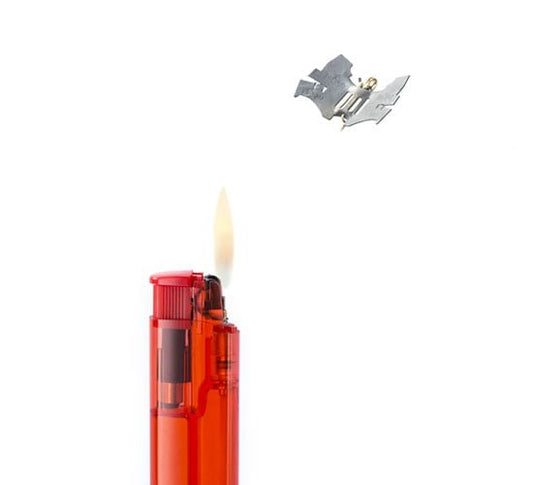
Escapade
David Bielander returns to Melbourne for a new exhibition, following on from his career-high exhibition, ‘Demiurge’ at the Museum of Modern Art, Arnhem. Bielander’s jewellery and objects are famous for...
Escapade
David Bielander returns to Melbourne for a new exhibition, following on from his career-high exhibition, ‘Demiurge’ at the Museum of Modern Art, Arnhem. Bielander’s jewellery and objects are famous for...
-
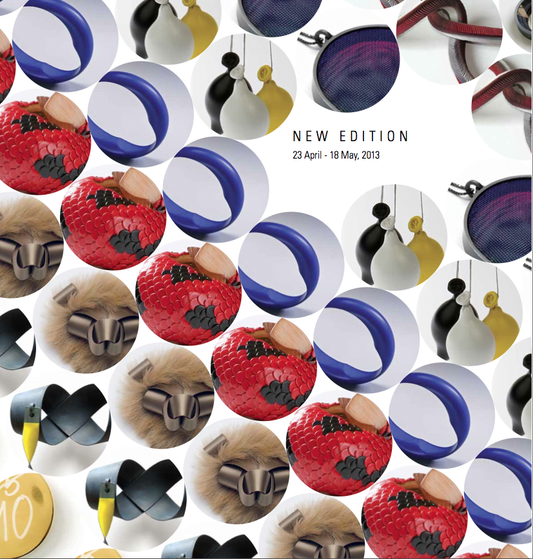
New Edition
'New Edition' is a curated exhibition; an exploration of the 'multiple' or editioned piece in contemporary jewellery. Works created as multiples are often overlooked in favour of the one-off, handcrafted...
New Edition
'New Edition' is a curated exhibition; an exploration of the 'multiple' or editioned piece in contemporary jewellery. Works created as multiples are often overlooked in favour of the one-off, handcrafted...
-
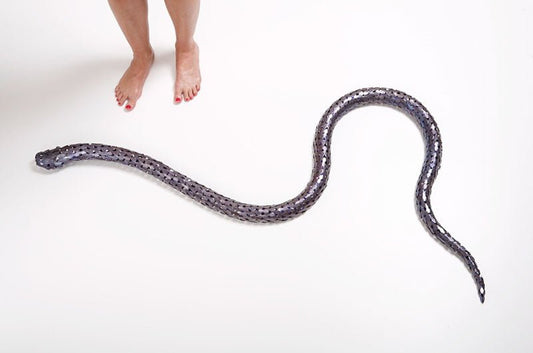
Ripsnorter
A two and a half meter python is surely a ripsnorter, so long as she is a piece of jewellery. It took nearly five years to get her right: how...
Ripsnorter
A two and a half meter python is surely a ripsnorter, so long as she is a piece of jewellery. It took nearly five years to get her right: how...


