

Kiko Gianocca
Through a process of transformation, which incorporates an explicit invitation for wearers to invest his pieces with their own meaning, Gianocca continues to produce profound works of jewellery that are able to carry elements of both our external and internal identities within a single piece.
Peter Jones
Swiss artist Kiko Gianocca explores materiality and form using a wide range of media such as porcelain, resin, felt, wood and precious metals. His work possesses a fineness of thought and application that sets it quite apart - regardless of the material or form, and Kiko's ouevre is wide ranging in this regard - there is a quiet intensity and subtlety in every piece. Kiko seems to believe that objects have, if not souls, at least the ability to communicate with and for us in ways that go beyond their objectness, if only we engage with them. In this regard, Benjamin Lignel has described Kiko's works as 'objects in waiting', articulate, charged, and full of a potential only realised once they are owned and worn.

Kiko Gianocca
View works
-
'The Departure' brooch
Regular price $1,200.00 AUDRegular price -
 Sold out
'Who am I?' ring
Regular price $3,990.00 AUDRegular price -
'Who am I?' ring
Regular price $4,950.00 AUDRegular price -
 Sold out
'Who am I?' ring
Regular price $3,100.00 AUDRegular price


Featured exhibitions
-
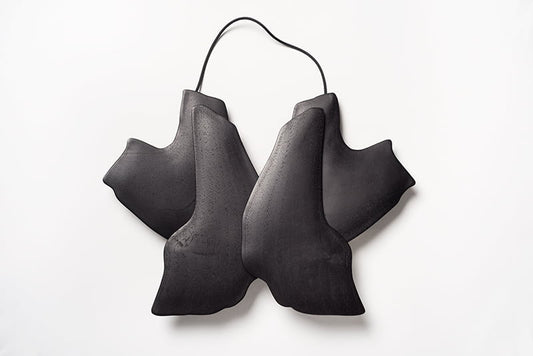
Pareidolia
Kiko Gianocca’s fourth solo exhibition at Gallery Funaki is titled 'Pareidolia', which refers to the human trait of perceiving in an object or sound a pattern or meaning that doesn’t...
Pareidolia
Kiko Gianocca’s fourth solo exhibition at Gallery Funaki is titled 'Pareidolia', which refers to the human trait of perceiving in an object or sound a pattern or meaning that doesn’t...
-
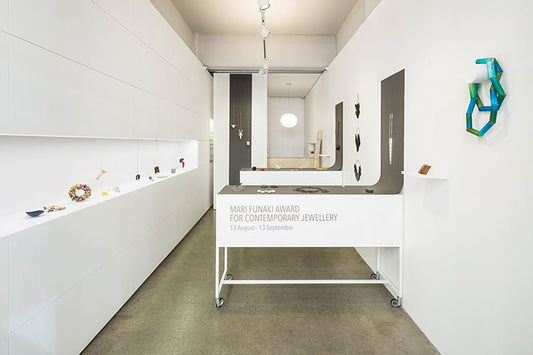
2014 Mari Funaki Award for Contemporary Jewellery
We're thrilled to announce the inaugural Mari Funaki Award for Contemporary Jewellery. Mari was a unique and passionate advocate for contemporary jewellery in Australia, both through her own remarkable practice...
2014 Mari Funaki Award for Contemporary Jewellery
We're thrilled to announce the inaugural Mari Funaki Award for Contemporary Jewellery. Mari was a unique and passionate advocate for contemporary jewellery in Australia, both through her own remarkable practice...
