

Jiro Kamata
Jiro Kamata deals with optical phenomena, colour and the reflected world, taking delight in the way surfaces collect and disperse light. He has developed a practice in which he applies highly developed goldsmithing techniques to non-traditional materials, primarily lenses of various types. He processes found and sometimes used materials into jewellery works that, through their play on reflection, light and colour, explore 'experienced memory'. To wear a Jiro Kamata piece is to enact a performance.
Jiro describes himself as a goldsmith, though his materials are more often glass and silver. This positions his philosophy and skill within a distinct jewellery tradition, part of a lineage of master craftspeople. Despite being steeped in this tradition, Jiro is considered one of the modern masters of the contemporary jewellery movement, known for its rejection of such labels in favour of 'artist'. American curator Kellie Riggs calls Jiro's works "instant contemporary classics dependent on no one period in time", and in fact they are design objects in the best sense: innovative in their materiality, surprising, entirely suited to their purpose and never compromising wearability or comfort. She also says "[he] is a minimalist and a maximalist. I choose to compare Jiro's opus of jewellery wonders to the most adventurous and stunning of high fashion, rather than to high art or academia because frankly, it's more fun."

Jiro Kamata
View works
-
 Sold out
'Holon #313' ring
Regular price $1,850.00 AUDRegular price -
'CE S Pendant L #3'
Regular price $1,720.00 AUDRegular price -
'CE S Pendant L #1'
Regular price $1,720.00 AUDRegular price -
'CE S Pendant M #3'
Regular price $1,530.00 AUDRegular price -
'CE S Pendant M #2'
Regular price $1,530.00 AUDRegular price -
'CE S Pendant M #1'
Regular price $1,530.00 AUDRegular price -
'CE Ring S #3'
Regular price $1,300.00 AUDRegular price


Featured exhibitions
-

Third Story
October 22, 2022 - October 05, 2022Peter Bauhuis / David Bielander / Julie Blyfield / Helen Britton / Aphra Cheesman / David Clarke / Simon Cottrell / Jess Dare / Veronika Fabian / Emma Fielden /...
Third Story
October 22, 2022 - October 05, 2022Peter Bauhuis / David Bielander / Julie Blyfield / Helen Britton / Aphra Cheesman / David Clarke / Simon Cottrell / Jess Dare / Veronika Fabian / Emma Fielden /...
-
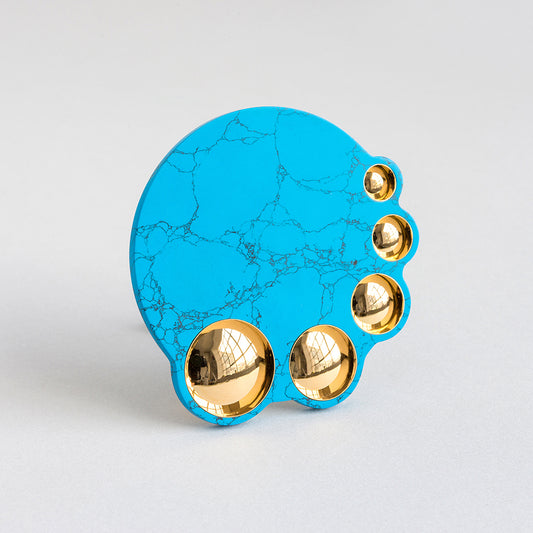
Extended Definition
"After my solo exhibition “dark to light to dark” in 2015 at Gallery Funaki, my interest and curiosity grew to find a new possibility with light and reflection in my...
Extended Definition
"After my solo exhibition “dark to light to dark” in 2015 at Gallery Funaki, my interest and curiosity grew to find a new possibility with light and reflection in my...
-

2018 Mari Funaki Award for Contemporary Jewellery
August 14, 2018 - September 15, 2018We are proud to present the third Mari Funaki Award for Contemporary Jewellery. Congratulations to Benedikt Fischer, winner of the Established prize (an acquisitive prize A$8000 with the work gifted...
2018 Mari Funaki Award for Contemporary Jewellery
August 14, 2018 - September 15, 2018We are proud to present the third Mari Funaki Award for Contemporary Jewellery. Congratulations to Benedikt Fischer, winner of the Established prize (an acquisitive prize A$8000 with the work gifted...
-
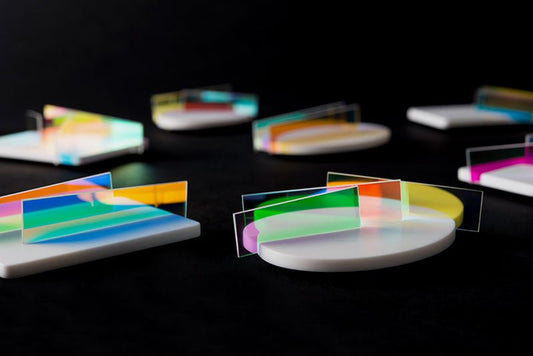
dark to light to dark
Material selection is the starting point for me. I have to fall in love with a material, and begin a relationship. If that relationship works, the material shows me what...
dark to light to dark
Material selection is the starting point for me. I have to fall in love with a material, and begin a relationship. If that relationship works, the material shows me what...
-
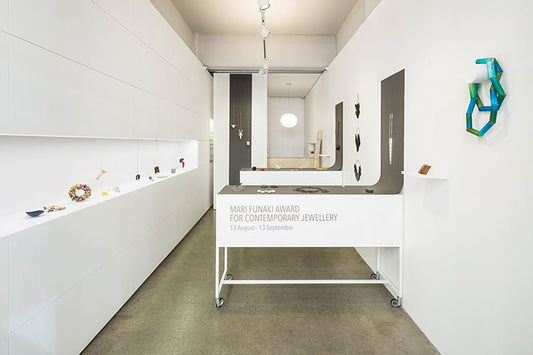
2014 Mari Funaki Award for Contemporary Jewellery
We're thrilled to announce the inaugural Mari Funaki Award for Contemporary Jewellery. Mari was a unique and passionate advocate for contemporary jewellery in Australia, both through her own remarkable practice...
2014 Mari Funaki Award for Contemporary Jewellery
We're thrilled to announce the inaugural Mari Funaki Award for Contemporary Jewellery. Mari was a unique and passionate advocate for contemporary jewellery in Australia, both through her own remarkable practice...
-
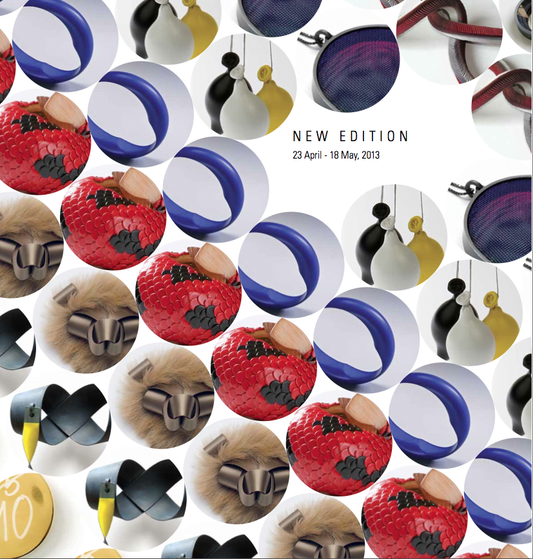
New Edition
'New Edition' is a curated exhibition; an exploration of the 'multiple' or editioned piece in contemporary jewellery. Works created as multiples are often overlooked in favour of the one-off, handcrafted...
New Edition
'New Edition' is a curated exhibition; an exploration of the 'multiple' or editioned piece in contemporary jewellery. Works created as multiples are often overlooked in favour of the one-off, handcrafted...


