

Helen Britton
At the core of Britton's practice is a profound engagement with materials and their histories: not just precious metals and stones but also humble or discarded materials such as recycled plastics, glass fragments, shells, bones and everyday trinkets. She selects materials not for intrinsic value but for what they signify, and her work is often described as a dialogue between personal memory and cultural narratives.
Britton’s jewellery is distinguished by its conceptual depth and material diversity. Her work is simultaneously playful and introspective — ranging from brightly coloured brooches and necklaces to assemblages incorporating vintage components — yet it often carries critical reflections on history, popular culture, human anxiety and environmental degradation. For example, The Rage of Dekoration explores symbols of love, hope and despair embedded in cheap trinkets, while her residency project Wildstone investigates the geological and human histories of stone and industrial jewellery production in Idar-Oberstein, Germany. Her practice also engages with ecological and historical themes; The Long Shadow of Time draws on porcelain, forests and religious history as metaphors for human experience and cycles of destruction and creation.
Beyond object making, Britton’s approach is reflective and accumulative: she documents her processes and finds through photography, drawing and installation, blurring boundaries between craft and conceptual art. Her work acknowledges the layered histories of materials, memory and place, encouraging viewers to consider the cultural and emotional stories embedded in the objects we make and carry. As one of the world’s most respected contemporary jewellers, Britton reveals jewellery as a human phenomenon loaded with meaning — a vehicle for connecting lived experience, cultural history and material imagination.
Robert Cook, Senior Curator at the Art Gallery of Western Australia describes Helen's works as "function[ing] as brilliantly dense ruptures in the order of the world, even as they are so clearly a part of it. They are complications and ferocious intensifications."

Helen Britton
View works
-
Helen Britton - The Story So Far
Regular price $110.00 AUDRegular price -
'The Beauty of Life' limited edition brooch
Regular price $550.00 AUDRegular price -
Helen Britton: Interstices
Regular price $55.00 AUDRegular price -
The Story So Far wrapping paper
Regular price $5.00 AUDRegular price -
Helen Britton: Jewellery Life
Regular price $55.00 AUDRegular price -
 Sold out
'Insect' brooch
Regular price $780.00 AUDRegular price -
Helen Britton: Jewellery Life (special edition)
Regular price $70.00 AUDRegular price


Featured exhibitions
-

Third Story
October 22, 2022 - October 05, 2022Peter Bauhuis / David Bielander / Julie Blyfield / Helen Britton / Aphra Cheesman / David Clarke / Simon Cottrell / Jess Dare / Veronika Fabian / Emma Fielden /...
Third Story
October 22, 2022 - October 05, 2022Peter Bauhuis / David Bielander / Julie Blyfield / Helen Britton / Aphra Cheesman / David Clarke / Simon Cottrell / Jess Dare / Veronika Fabian / Emma Fielden /...
-

Koala Hotel
February 04, 2023 - March 10, 2023Shark: Hey everyone we’re going to Australia! Seahorse: No way! I’m gonna bring my friends. Bush Rat: Where we gonna stay?Shark: At the Koala Hotel of course. Eel: Isn’t that...
Koala Hotel
February 04, 2023 - March 10, 2023Shark: Hey everyone we’re going to Australia! Seahorse: No way! I’m gonna bring my friends. Bush Rat: Where we gonna stay?Shark: At the Koala Hotel of course. Eel: Isn’t that...
-
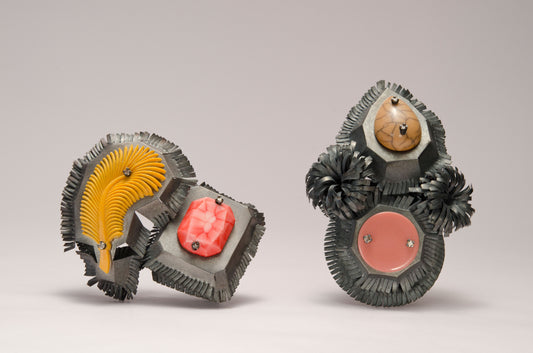
Pairs of Pieces
When I'm making my work, although I rarely have a clear idea of the end result, I am in pursuit of a fleeting vision that I chase along until the...
Pairs of Pieces
When I'm making my work, although I rarely have a clear idea of the end result, I am in pursuit of a fleeting vision that I chase along until the...
-
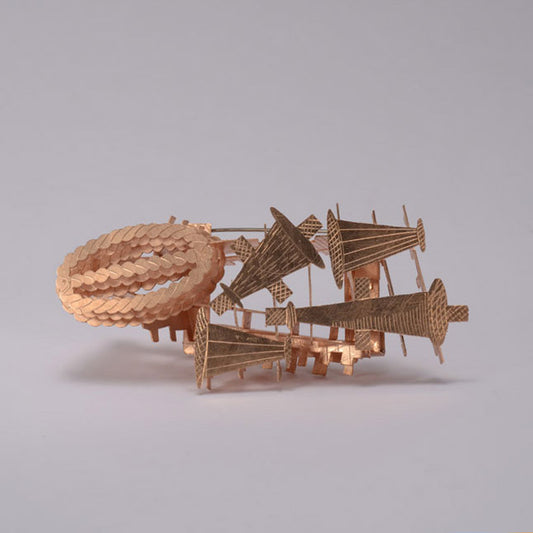
Industrial
A tiny girl stands in an enormous factory. They are casting steel: steel for ships, steel for the mines. Nearby the ships will be built; that she knows. The steel...
Industrial
A tiny girl stands in an enormous factory. They are casting steel: steel for ships, steel for the mines. Nearby the ships will be built; that she knows. The steel...


